12 out of Thousands
12 Souls. 12 Works. One Enduring Message
Step into the world of Project.One.
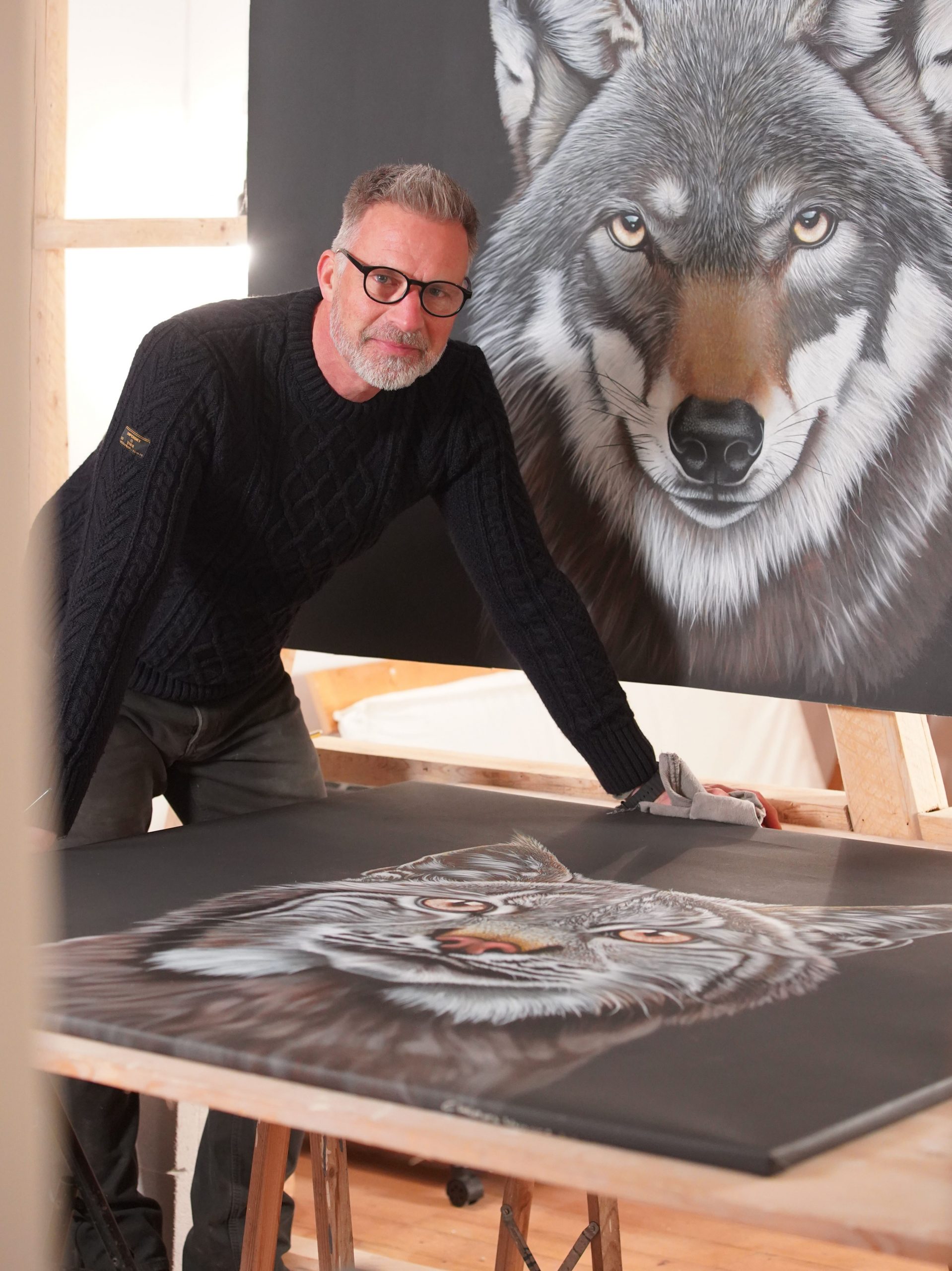
Our gallery presents more than just portraits; it creates encounters on equal terms.
Each work has been transferred onto high-quality aluminium using our distinctive anodised printing technique. This choice of material is no coincidence: while the natural world around us is fragile, the metal represents the lasting responsibility we carry.
Experience the depth, detail and power of these twelve unique beings.
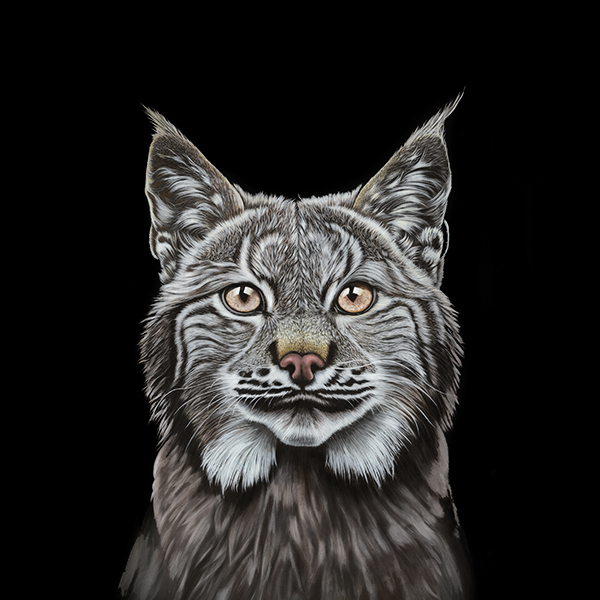
Status: Endangered (Switzerland)
The Lynx
“The Ghost of the Alps”“
Perhaps the lynx is one of the most mysterious animals of our forests. It lives in solitude, moves mostly at dusk and roams territories far larger than we might imagine. If you are lucky enough to encounter one, you may have little more than a fleeting moment – a glimpse from the forest, a silent disappearance among the trees.
And yet, there was a time when it had disappeared completely.
The Eurasian lynx was driven to extinction in Switzerland. It was not until the 1970s that the species began to return through targeted reintroduction programmes. Today, lynx once again live in the Jura, the Alps and north-eastern Switzerland.
But returning does not mean being safe.
In 2024/25, around 364 independent lynx were living in Switzerland: approximately 86 in the Jura, 246 in the Alps and 32 in north-eastern Switzerland. The populations are small and, in some areas, isolated from one another. Low genetic diversity also remains a challenge.
The lynx needs large, connected habitats. Its survival therefore depends not only on where the forest begins. It also depends on the spaces in between – the places where fragmented landscapes need to be connected and habitats linked together.
Perhaps that is the story of the lynx: We once lost it. We brought it back. And yet, it is still not certain whether it will truly be able to stay.
Swiss Red List: Endangered, EN (Endangered)
Sources: FOEN; KORA
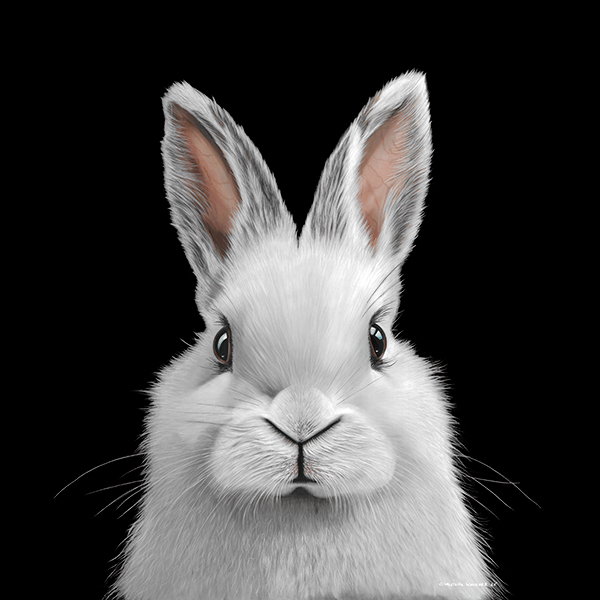
Status: Potentially threatened / Under significant pressure (Alpine region)
The Mountain Hare
“The White Glow in the Grey“
The mountain hare belongs to a world that is often inaccessible to us. Above the tree line, where winters are long and snow and cold shape every aspect of life, this is where it makes its home.
Its body is perfectly adapted to these conditions. Its coat changes with the seasons, making it almost invisible in winter. Its powerful hind legs carry it safely through deep snow. Everything about it seems made for this life.
Yet this very specialisation can become a weakness when its environment begins to change.
In Switzerland, the mountain hare is currently considered Near Threatened. There is no reliable estimate of its total population. It lives mainly in alpine regions – habitats increasingly affected by climate change and human recreational activities.
As temperatures rise, snow-covered areas are becoming smaller and periods of continuous snow cover are becoming shorter. At the same time, the habitats of mountain hares and European brown hares increasingly overlap. This can make competition and possible hybridisation more significant.
The mountain hare is a quiet inhabitant of these high-altitude landscapes. Perhaps that is why we so rarely notice it. Its white winter coat blends into the snow while the world around it is slowly changing.
And perhaps that is what makes its story so striking: an animal can be perfectly adapted to its world – and still become vulnerable when that world changes too quickly.
Swiss Red List: Near Threatened (NT)
Source: FOEN / Swiss Red List of Mammals
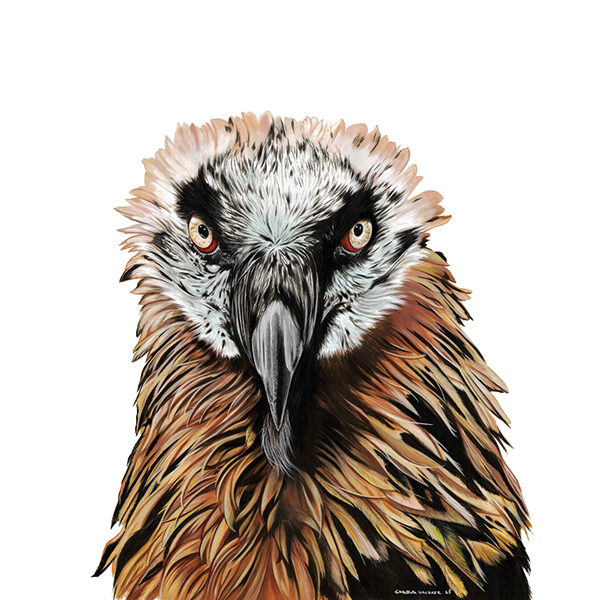
Status: Rare / Reintroduced (Switzerland)
The Bearded Vulture
“King of the Skies – Back from the Brink“
With a wingspan of almost three metres, the bearded vulture is one of the most impressive birds of the Alps. When it glides silently along the mountain cliffs, it seems as though it has always belonged to this landscape.
And yet, it disappeared from these mountains entirely.
During the 20th century, the bearded vulture was driven to extinction in the Alps. For decades, not a single one of these magnificent birds could be seen in the skies above the region. Since the 1980s, however, it has been returning to its former habitat as part of an international reintroduction programme. Switzerland plays an important role in this effort.
Today, bearded vultures once again soar above the Swiss Alps. The Pro Bartgeier Foundation estimates the Alpine population at around 350 individuals.
Its return is a conservation success. But it is not yet a story with a secure ending.
The bearded vulture needs time. It matures slowly and reproduces only after reaching adulthood. Under natural conditions, a breeding pair can raise no more than one chick per year. Every loss therefore matters.
Perhaps that is what makes its story so remarkable: the bearded vulture shows us that extinction does not always have to be the final chapter. But it also reminds us how much patience, commitment and protection are needed to bring a lost species back – and to make sure it can stay.
Swiss Red List: Critically Endangered (CR)
Special characteristic: Maximum one chick per breeding pair per year
Sources: Pro Bartgeier Foundation, Swiss Ornithological Institute (Vogelwarte.ch)
Bring a Piece of Awareness Home
“Is there a work that speaks to you in particular? Each of our portraits is available as a high-quality reprint on aluminium. By purchasing one, you directly support the continuation of our mission, and make a clear statement for wildlife conservation in your own home.
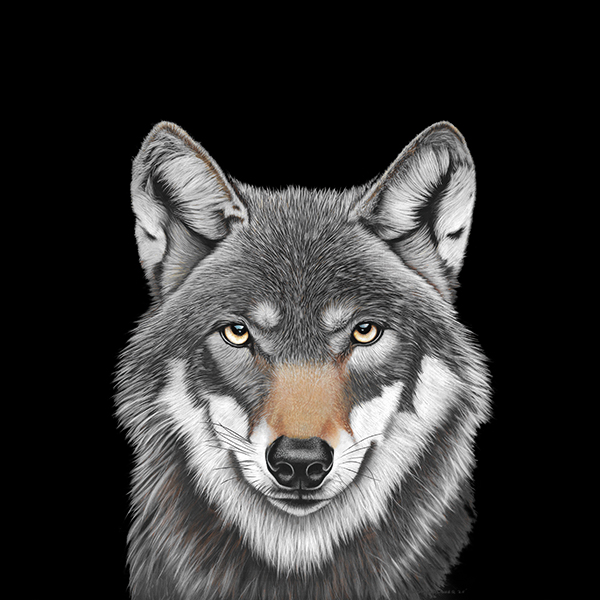
Status: Protected / Highly debated (Switzerland)
The Wolf
“The Border Crosser – Between Myth and Reality“
Few animals in Switzerland have a history as turbulent as the wolf.
Once driven to extinction, it returned to Switzerland on its own in the mid-1990s. In 2012, the first pack was established on Calanda in the canton of Graubünden. Since then, the wolf has continued to spread across Switzerland.
Following the completion of the 2025/26 monitoring year, 43 packs were confirmed. Thirty-two of them live entirely within Swiss territory. At the beginning of 2026, the Swiss Federal Office for the Environment (FOEN) estimated the Swiss wolf population at around 350 individuals.
With its return, the wolf has once again become part of our landscape. At the same time, it is one of the most controversial issues in Swiss nature conservation. Encounters with livestock and attacks on sheep and other grazing animals have led to intense debate about herd protection, population management and the place the wolf should have in our cultural landscape.
Perhaps that is what makes the wolf’s story so remarkable: it reminds us that nature does not exist only where we have decided to make room for it.
The wolf lives in a landscape shaped by people. Its return therefore confronts us with more than the question of how many wolves Switzerland can accommodate.
It also asks us how much wilderness we are willing to allow within our own living environment.
Swiss Red List: Vulnerable (VU)
Sources: Swiss Federal Office for the Environment (FOEN); KORA
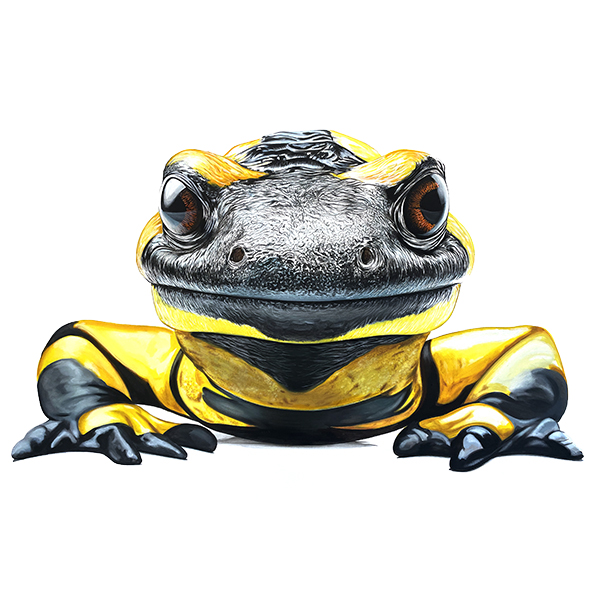
Status: Vulnerable (Switzerland)
The Fire Salamander
“Guardian of the Forest Floor – A Quiet Disappearance
Glossy black skin and vivid yellow markings make the fire salamander unmistakable. When it slowly moves across the damp forest floor after a warm summer rain, it is almost impossible to mistake it for any other animal.
And yet, we know surprisingly little about how many of them still live in Switzerland. There is currently no reliable nationwide population estimate. This is precisely why info fauna conducts its own monitoring programme.
The fire salamander depends on moist deciduous forests and small, clean forest streams. This is where its larvae develop. What may seem like an insignificant little stream to us can be the place where a fire salamander’s life begins.
Yet these very small habitats are highly sensitive. Roads can isolate populations from one another, construction projects can destroy habitats, and water abstraction from streams can affect important breeding waters.
There is also another threat – one that is almost invisible: salamander plague. In other parts of Europe, it has already caused entire populations to collapse.
The fire salamander reminds us that species do not always disappear with a dramatic event. Sometimes a stream becomes smaller, a forest drier, a habitat fragmented – and eventually, an animal that once seemed to be a natural part of the landscape is simply no longer there.
Swiss Red List: Vulnerable (VU)
Sources: info fauna / karch; Swiss Federal Office for the Environment (FOEN)
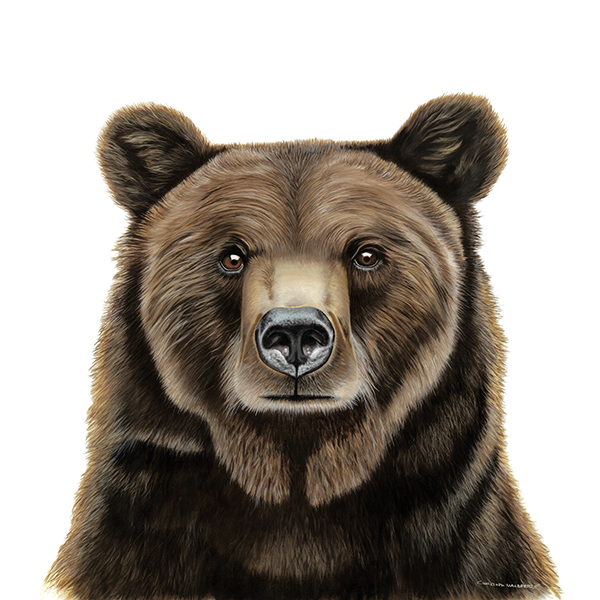
Status: Returning / Strictly protected (Switzerland)
The Bear
“The Old King – The Return of a Legend“
A bear in Switzerland is still a rare sight today.
Yet the brown bear was once part of Europe’s native wildlife. In Switzerland, it was once among the great inhabitants of our forests and mountains, until large predators disappeared in the 19th century – through persecution, habitat loss and the decline of their natural food sources.
Since 2005, individual bears have begun returning. They migrate from Trentino through Graubünden into Switzerland. However, there is still no resident bear population in the country. All bears recorded so far have been male, and after spending varying lengths of time in Switzerland, they have returned to their region of origin.
Yet Switzerland is not fundamentally unsuitable for bears. KORA points out that suitable habitats do exist.
Whether bears will one day live permanently in Switzerland therefore depends on more than whether there is enough forest, food and space to retreat. It also raises the question of whether we are willing to live alongside an animal that disappeared from our landscape for centuries.
The bear is therefore more than a rare visitor to Swiss soil.
It tells the story of a natural world that could return – if we give it the space to do so.
Swiss Red List: Regionally Extinct (RE)
Sources: Swiss Federal Office for the Environment (FOEN); KORAAA
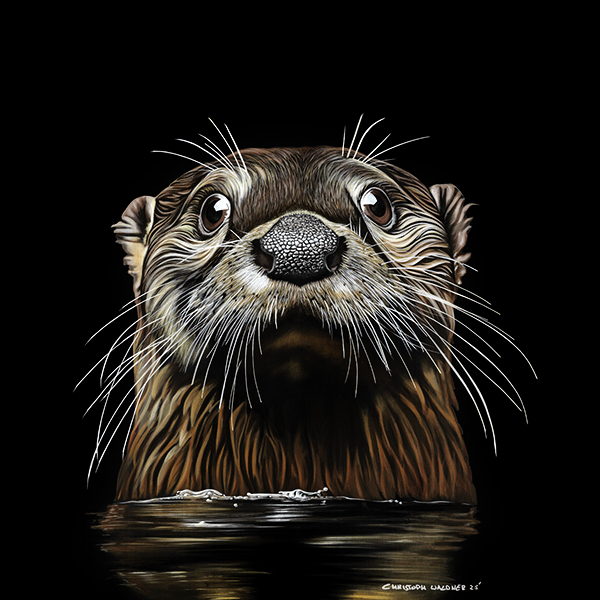
Status: Naturally returning (Switzerland)
The Eurasian Otter
“The Playful Returnee – A Life Along the River“
For almost two decades, the Eurasian otter had disappeared from Switzerland.
The last confirmed record of a wild otter dated back to 1989. Then something began that had once seemed almost unimaginable: the otter started to return on its own.
Since 2009, Eurasian otters have once again been regularly recorded in Switzerland. Animals migrate in from France and Austria. The waterways themselves are their routes back into Switzerland. Where rivers and streams remain connected, otters can spread and reach new habitats.
In eastern Switzerland, their range continues to expand. In 2025, the first confirmed evidence of offspring was even recorded in the Surselva region.
A small moment – and yet an important sign.
Because returning does not necessarily mean that the Eurasian otter is safely established again. It is classified as Critically Endangered on the Swiss Red List. Roads, barriers and the quality of waterways and riverbanks can determine whether individual returning animals can once again become a stable population.
The Eurasian otter shows us that nature can return when we give it space.
But sometimes it is not enough for an animal to come back. We also have to make sure that it can stay.
Swiss Red List: Critically Endangered (CR)
Situation: Recolonisation since 2009; offspring confirmed in the Surselva region in 2025
Sources: Swiss Federal Office for the Environment (FOEN) / info fauna; Pro Lutra Foundation; WWF
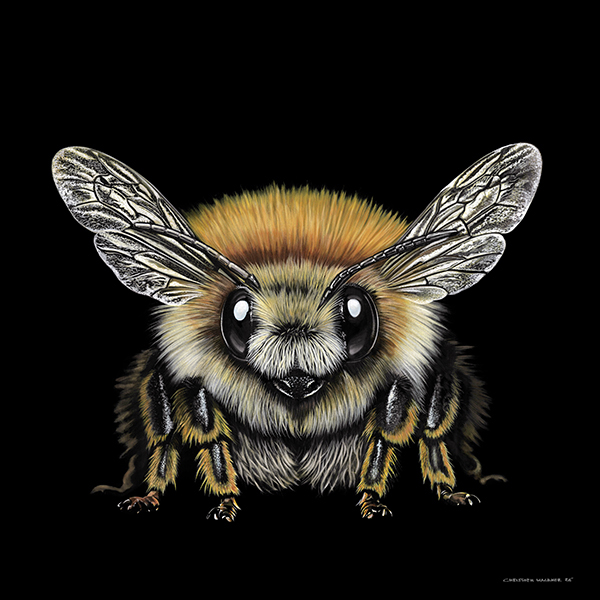
Status: Endangered (Switzerland) ((Schweiz)(Schweiz)
The Moss Carder Bee
“The Little Pollinato“
You don’t have to be big to be important.
The moss carder bee is a highly specialised bumblebee species that today occurs in Switzerland only in a few isolated locations. It is particularly dependent on extensive wet meadows in lowland areas – habitats that are becoming increasingly rare.
The current Swiss Red List of bees classifies the moss carder bee as Endangered. Its populations are small, the bees occur only at very low densities, and their survival depends on the appropriate management and preservation of their habitats.
There is no reliable estimate of the total number of individual moss carder bees in Switzerland. What we do know is concerning: the few remaining populations are like small islands, separated from one another across the landscape.
Its disappearance would not begin with a dramatic event. It would happen quietly – flower by flower, meadow by meadow, location by location.
And perhaps we would only notice when it was already too late.
Because when a bumblebee disappears, we do not lose just an insect. We lose a small piece of what makes our landscape alive.
Swiss Red List: Endangered (EN)
Population: Very small, isolated populations
Habitat: Particularly extensive wet meadows in lowland areas
Source: Swiss Federal Office for the Environment (FOEN) / info fauna, Swiss Red List of Bees 2024
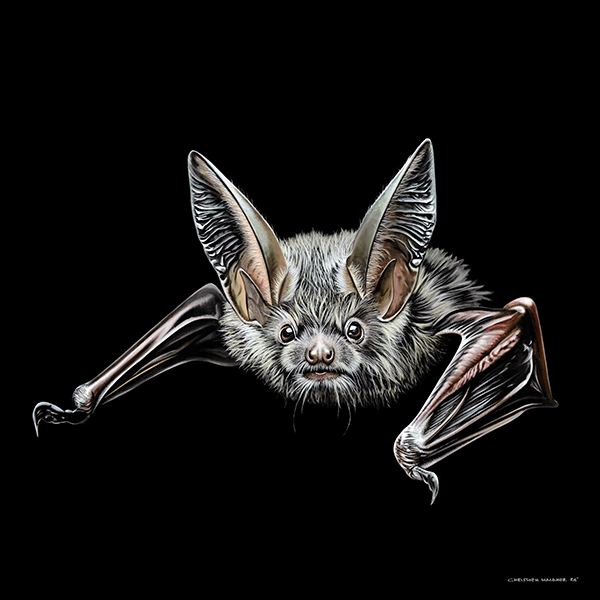
Status: Critically Endangered (Switzerland)
The Long-eared Bat
“The Silent Beauty of the Night“
When most of us are asleep, their world begins.
Long-eared bats are extraordinary nocturnal hunters. Their enormous ears help them detect prey and navigate their surroundings. They hunt along forest edges, in gardens and above meadows, moving through structurally diverse landscapes. During the day, they often rest in buildings or other sheltered roosts.
They live much closer to us than we might think.
Yet it is precisely this connection between nature and the human environment that makes them vulnerable. Roof renovations can seal off roosts, suitable places of refuge are disappearing, and increasing artificial lighting is changing the night.
For bats, darkness is their habitat.
Several long-eared bat species in Switzerland are listed on the Red List. The brown long-eared bat is considered Vulnerable, while the grey long-eared bat is classified as Critically Endangered. There is currently no reliable nationwide estimate of their populations.
Perhaps this is why sometimes we do not need to do more, but less: less light, less sealed ground, fewer interventions in the places we barely notice.
So that the night can remain dark for those who call it home.
Swiss Red List: Grey long-eared bat – Critically Endangered (CR)
Sources: Swiss Bat Conservation Foundation / info fauna
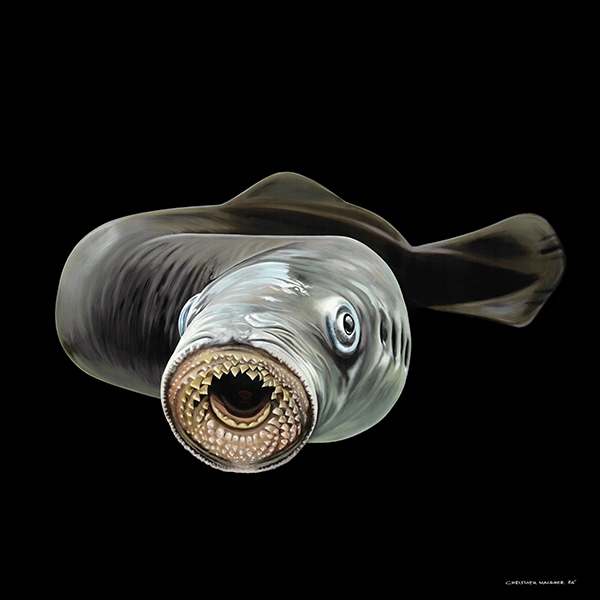
Status: Endangered (Switzerland) ((Schweiz)(Schweiz)
The European Brook Lamprey
“The Mysterious Life Beneath the Water“
It looks like a small fish – but it is not.
The European brook lamprey belongs to a group of jawless fish and leads a life that remains hidden from our eyes for much of the time. It spends several years as a larva, concealed within the sediment of the streambed, before developing into an adult.
Perhaps that is precisely why we know so little about it.
In Switzerland, the European brook lamprey is considered Endangered. The current Swiss Red List of fish and jawless fish species classifies it as Endangered (EN). It depends on intact flowing waters with different current patterns and suitable sediments – structures that may seem insignificant to us, but are essential to the lamprey’s life cycle and reproduction.
River engineering, barriers and other interventions can alter or destroy precisely these structures.
Due to its hidden way of life, there is currently no reliable nationwide estimate of its population in Switzerland.
Perhaps that is why the European brook lamprey is such a quiet part of our aquatic world: it can disappear long before we even notice that it is gone – or before we have ever noticed it at all.
Swiss Red List: Endangered (EN)
Sources: Swiss Red List of Fish and Jawless Fish, Swiss Federal Office for the Environment (FOEN) / info fauna; WWF
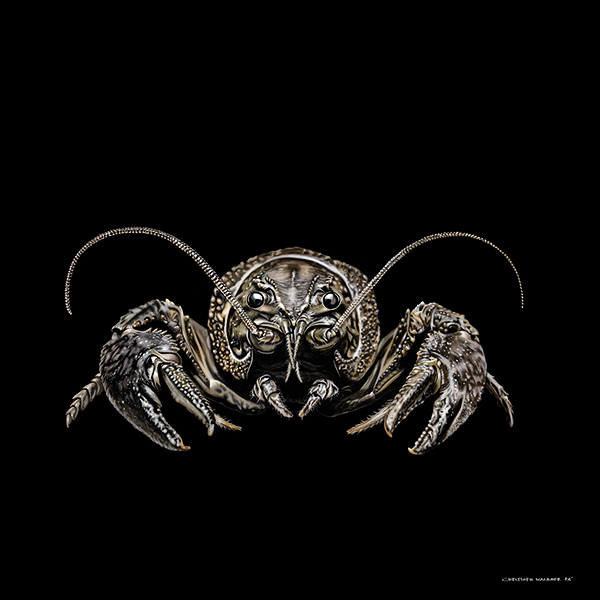
Status: Endangered (Switzerland)
The Stone Crayfish
“The Hidden One Beneath the Water’s Surfaceche“
You have to look closely to discover it.
The stone crayfish lives hidden beneath rocks, in crevices and along the bottom of cool, clean streams. Most of the time, it remains out of sight. And it is precisely this unobtrusive nature that makes it such a remarkable indicator of the health of our waterways.
In Switzerland, the stone crayfish is considered Endangered.
It needs cool, clean water and suitable structures along the streambed and riverbanks. Yet these habitats are being altered by river engineering, water abstraction and other human interventions.
One particularly serious threat comes from outside: introduced North American crayfish species can carry crayfish plague – a disease that can be fatal to native crayfish.
The stone crayfish therefore represents a world we often notice only when it is no longer there.
Perhaps that is what makes its story so important: as long as it lives beneath the stones of a clean stream, we hardly notice it. When it disappears, we lose more than a crayfish. We lose a small piece of the natural world beneath the water’s surface.
Swiss conservation status: Category 2 – Endangered
Sources: info fauna; Swiss Federal Office for the Environment (FOEN) – Action Plan for Crayfish in Switzerland
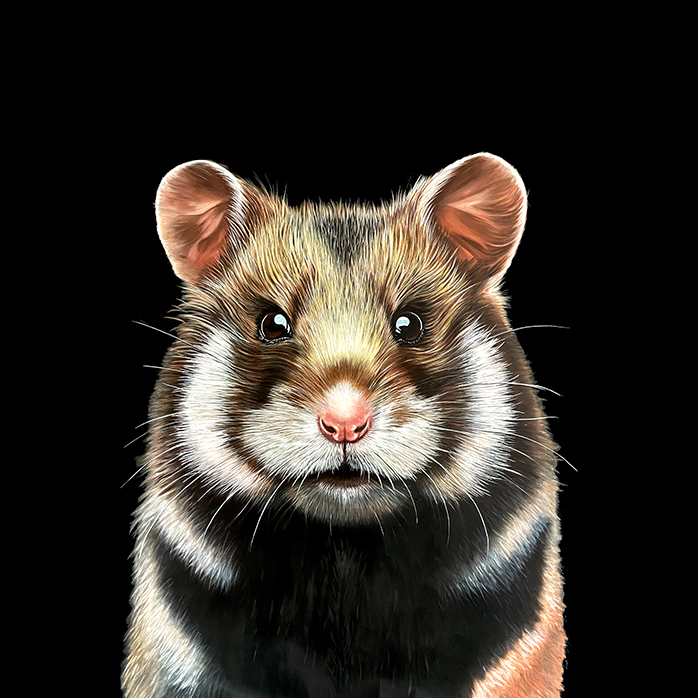
Status: Critically Endangered (Central Europe / Border Regions)
The European Hamster
“A Colourful Fighter on the Losing Side“
The European hamster digs extensive underground burrows, stores food supplies and spends much of its life beneath the ground. It was once a characteristic inhabitant of our agricultural landscapes.
Today, however, many people know the hamster more from pet shops than from the wild.
And this is where a particular tragedy lies: we can easily forget that animals we know as pets or from pet shops are originally part of our natural landscapes. They do not belong only in cages, terrariums or enclosures – they also belong in the world they come from.
The European hamster therefore stands for all those animals whose natural homes are slowly disappearing from our awareness, while we continue to know their names and recognise what they look like.
Its story shows that a species is not only lost when nobody remembers that it exists. Sometimes we still know an animal very well – and yet have forgotten where it truly belongs.
Perhaps that is one of the tasks of ReMember:
to remind us that every animal has a home.
Nature.
IUCN status since July 2020: Critically Endangered (CR)
Source: International Union for Conservation of Nature (IUCN)
„“The greatness of a nation and its moral progress can be judged by the way its animals are treated.”“
Mahatma Gandhi